With the publication of the National Cancer Plan, the UK Government has set out clear priorities for prevention, faster diagnosis and access to treatment. At Flatiron we welcomed these commitments, and the strong ambitions to improve outcomes for people with cancer and to reduce the number of lives lost.
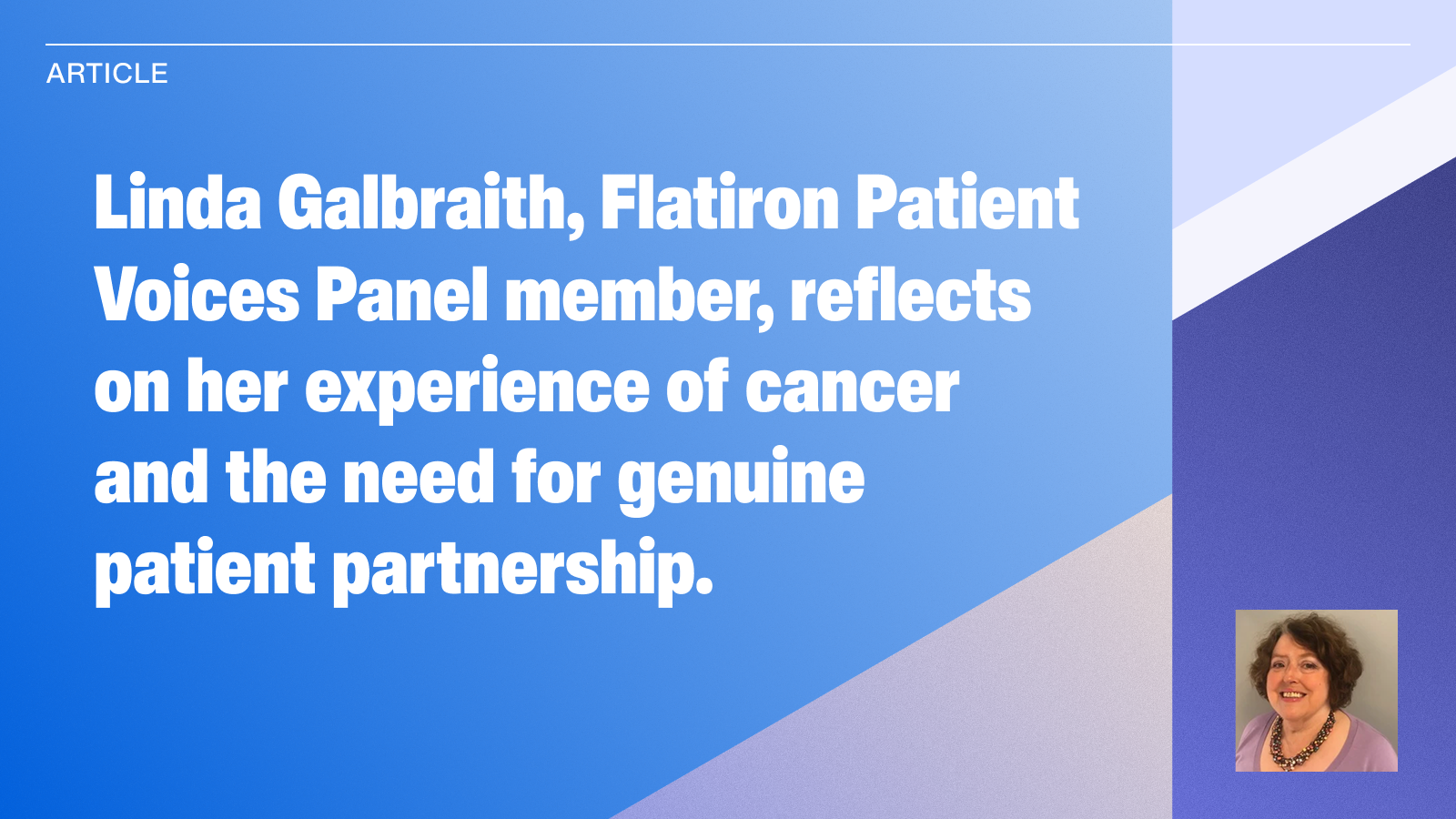
But what does this all mean for people directly affected by cancer? We spoke to one of our Patient Voices Panel members, Linda Galbraith, about her experience of cancer and the need for genuine patient partnership if we are to unlock the full benefits of health data, and move the dial on cancer outcomes.
In 2007, Linda was diagnosed with an extremely rare type of bone cancer. But being the only person with this kind of tumour in the whole of the UK, her diagnosis was not simple.
She began having symptoms four years earlier in 2003, starting with nosebleeds, and ultimately leading to a 9.5 cm sarcoma growing in her sinus, eventually pushing her eye out of its socket. It took 11 medical appointments to understand what was happening, and to give Linda her diagnosis.
After realising just how rare her tumour was, Linda was incredibly keen for others to learn from her experience. The tissue from her tumour was sent to the UK Biobank, so that research could be conducted and shared with medical professionals. This kick-started a long-term passion to accelerate diagnosis, spare other patients from the major surgical interventions that she endured, and ultimately ensure that health research reflects the real world.
Linda has gone on to become an influential and respected advocate for shaping patient-centred research and innovation. She serves as the Patient and Public Involvement and Engagement (PPIE) Chair for the International Alliance for Cancer Early Detection (ACED), the PPI Lead for RadNet Scotland, the Co-Chair of the Scotland Cancer Centres, and works closely with the Medicines and Healthcare products Regulatory Agency (MHRA) on rare disease initiatives.
She sees the utilisation of health data as key to improving outcomes, and believes that learning from the experiences of those living with cancer is a vital thread in improving services.
Yet she knows that it is not an easy task, and acknowledges a disconnect between public attitudes and the aims of data usage.
From my experience I know that real world data is needed in order to improve care. It’s the only way to find out more about cancer, and the experience of those who live with it every day.
There is a way forward – communication and collaboration must be a cornerstone of all work in this area. “It really helps if people can understand why health data is so important, what it is used for, and how it can help people. When people feel properly informed, they really do want to share their data.”
In practice this means having a genuine two-way dialogue with patients to guide how data is used, including how it is shared. Working with the people who are directly impacted, and actually listening to their views, is what builds trust.
“This is why Flatiron’s work to consult patients is so important, they ensure that there are many checks and balances in place, and if people don’t want to share their data, they don’t have to.”
SPOTLIGHTHow Flatiron works with patients like Linda As experts in improving the quality of cancer data to support insights into patient care and research, we know how vital meaningful patient and public involvement is. We are committed to incorporating the voices and experiences of UK cancer patients in all areas of our work, in fact, it’s key to our mission. We do this through our Patient Voices Panel, hosting conversations with local communities, and including patients in our decision making, with all data requests going through an research oversight process that includes clinicians, patients and lay members. We also believe that transparency is key. We explain how people’s data is used, who can access it, and what safeguards are in place. In our partnerships with the NHS, we put patients in control, and they can choose whether they do or don’t want to share their data. Our current average opt-out rate across our NHS partners is just 4%, showing the power of working with patients as true, informed partners. |
Ultimately Linda feels incredibly positively about the possibilities for improving treatment and care through the use of health data for research, and the potential for patients’ lives to improve. “There is the potential to do lots of great work right now, without huge changes needed.”
The National Cancer Plan lays the foundation for this, but ensuring implementation relies on collaboration, partnership and valuing the voices of those directly impacted by cancer and cancer services. Furthermore, debates around the use of health data are only set to intensify as the newly published Health Bill makes its way through parliament. Get this right and the benefits could be transformational – but get this wrong and we risk eroding public trust at a critical moment.
The Government has bold ambitions for NHS data, but the starting point for real and lasting change is simple: involve patients as genuine partners.